Spoiler: probably not you, and possibly Facebook
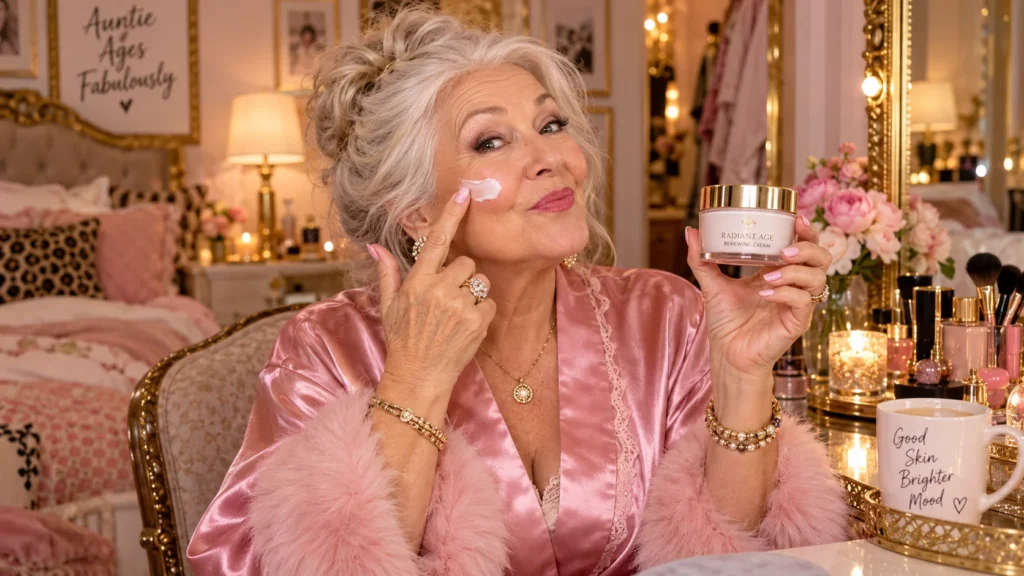
Picture the scene, it’s a quiet Tuesday evening, you’re browsing Facebook and suddenly your late Auntie pops up as an influencer promoting a revolutionary anti-ageing cream she’s been using for 7 years. Ironically, that’s exactly how long she’s been dead.
No one has given permission for anyone to use Auntie’s persona. Neither did Auntie, in fact she thought the beauty industry was a huge marketing scam. You’re left wondering who, exactly, you can complain to.
Ridiculous? Yes, entirely beyond the capabilties of AI? Not remotely. I’m not suggesting for one minute that Facebook is doing this but it is not inconceivable that companies may use this data and not in a way you or your relatives would approve.
AI can now reproduce someone’s voice from surprisingly little recorded material. Not just the accent, but the pauses, the inflections and those peculiar little expressions that made the voice unmistakably theirs. It can then make that voice say things the original owner never said, never intended to say and might have been absolutely furious to hear.
Which raises a rather interesting question. Who owns your voice after you’re dead?
The British approach: make it complicated
I’d assumed there would be a law somewhere saying your voice belongs to you. It seems such an obvious thing to own, rather like your fingerprints or the scar on your left arm. Apparently not.
In Britain, we don’t have a general legal right to own our voice or likeness. We have a collection of other laws that might help, depending on the circumstances, which is a wonderfully British approach to something that ought to be fairly straightforward.
There’s something called passing off, which can sometimes stop people falsely suggesting you’ve endorsed a product. Unfortunately, that generally involves proving you had some commercial reputation worth protecting. Quite useful if you’re David Beckham. Rather less useful if you’re Mrs Summers from number 14, whose only public appearances involved complaining about the recycling collection.
Here’s another little surprise. UK data protection law doesn’t cover deceased people. According to the Information Commissioner’s Office, personal data protection applies to the living.
So you spend your entire life being asked to accept cookies, update your privacy preferences and prove you’re not a robot, only to discover that when you finally die, your personal data loses that particular protection.
Other laws may still apply, thankfully. But there’s no simple rule preventing someone from making a digital imitation of you.
America has been busy
Across the Atlantic, where lawsuits are practically a national pastime, things are moving rather faster.
Tennessee passed something called the ELVIS Act in 2024. Yes, Elvis. The state has given people specific legal rights over their voices, including AI-generated imitations. Those rights continue after death, initially for ten years and potentially much longer.
So Elvis has legal protection against unauthorised digital impersonation. Meanwhile, the rest of us are left wondering whether our grandchildren might one day hear us recommending a new broadband package.
California has also tightened its rules, particularly around deceased performers. The idea is that dying shouldn’t automatically give a film studio permission to resurrect you for a sequel.
There have been attempts to introduce national American legislation too, although balancing people’s rights over their voices against freedom of expression is proving rather complicated.
Who would have thought that death could generate so much paperwork?
Some famous people saw this coming
Robin Williams was remarkably forward-thinking. Before his death in 2014, he arranged restrictions on the commercial use of his image and likeness for 25 years afterwards, with rights assigned to a charitable foundation.
In other words, he took steps to ensure nobody could bring him back to advertise toothpaste without permission.
James Earl Jones took a different approach. He gave his blessing for technology to recreate his Darth Vader voice, allowing the character to continue speaking after his death.
Which sounds perfectly reasonable until you discover what happened when AI Darth Vader appeared in the video game Fortnite in 2025. Players promptly found ways of making him swear.The developers had to intervene, and the actors’ union filed a complaint over the use of AI instead of human voice performers. Even the Dark Side, apparently, has trouble with employment law.
But what about the rest of us?
The celebrity cases make headlines because famous voices are commercially valuable. But I think the more interesting question concerns ordinary people.
Your mother, your husband, your grandfather. People whose voices may have no commercial value whatsoever but are absolutely irreplaceable to the people who loved them.
We leave recordings everywhere now. Videos, voicemails, voice messages, social media clips. Probably enough material for an AI system to produce a convincing version of many of us without our ever having intended it and who gets to decide what happens to it all?
The person who made the recordings may own the copyright in them. A technology company may have obtained permission to use uploaded material under its terms and conditions. Your family may inherit some rights, depending on the circumstances.
But owning a recording isn’t the same as owning the voice in it. And being able to imitate somebody certainly doesn’t mean you should.
I suspect most of us haven’t given this a moment’s thought. We’ve been too busy remembering where we put our passwords.
Perhaps we should leave instructions
I’m beginning to think we need a new section in our wills.
Alongside who gets the house, the jewellery and the collection of mismatched Tupperware lids, we might include a few instructions about our digital selves.
Are we happy for our families to recreate our voices? Would we like our grandchildren to be able to hear us telling stories? Are we comfortable with an AI version of ourselves answering questions long after we’ve gone?
And, most importantly, are we prepared to be held responsible for something our digital replacement says?
You can record your wishes, appoint somebody to look after your digital affairs and check what permissions you’ve already given to technology companies. Whether every instruction will be legally enforceable is another matter, but it’s a sensible place to start.
Personally, I’d want a clause stating that any digital reproduction of me must never recommend a product I wouldn’t have bought myself. Which should rule out most extended warranties.
The bit that isn’t funny
A voice is a peculiar thing. It’s not just a sound. It’s the way someone said your name, the little laugh before a joke, the particular tone that meant you’d done something you shouldn’t.
When someone dies, those are often the things we miss most.
The ability to preserve them could be wonderful. But there’s a difference between preserving someone’s voice and taking possession of it. And an even bigger difference between remembering what someone said and making them say something new.
Which brings me to Ghost Grandad.
Marcus Whitfield, a terminally ill grandfather, decides he’s not remotely ready to stop having an opinion about his five-year-old granddaughter’s upbringing. So he creates the technology to continue educating her after his own has ended.
At least Marcus has the advantage of having agreed to the arrangement himself. Whether everyone else would agree with him is an entirely different matter.
It’s a funny, occasionally absurd look at where AI might be taking us. And the alarming thing is that some of the technology is already here.
In the meantime, if Grandad rings to offer you a discount on a new air fryer, I’d ask a few questions before giving him your credit card details.
Curious about Ghost Grandad? Read the first five chapters free.
This article is for general interest, not legal advice. Laws governing AI-generated voices and digital replicas are evolving, and the position varies considerably between countries.